Hello, dear visitors and regular readers of our blog about aquarium fish! If you already have such pets or you only plan to get an aquarium, you should know the basic features of the care of fish and the arrangement of their habitat. In this article, we will tell you about the nuances of choosing a ground for the aquarium and provide useful tips and advice.
There are several varieties of the substrate, and to make sure the fish are comfortable, it is important to make the right choice of substrate. Read our article to learn about their types, and you can easily choose the best option. In this way, you will be able to create a normal ecosystem in the aquarium in which the fish can grow and develop properly.
What types of soil exist?
In addition to the aesthetic function of the bedding in the artificial pond, it also plays the role of a certain filter. As a result of the decay and decomposition of fish excretions and their food residues, poisons are formed. The ground can neutralize them. Therefore it is important to select a substrate responsibly. The choice must be made based on what kinds of fish will inhabit the aquarium, what plants and in what quantity will be there, etc.
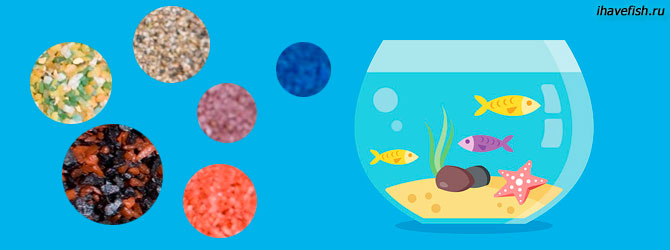
First of all, it is worth knowing that there are 3 main varieties of aquarium grounds:
- Natural substrate. Includes only naturally occurring materials that have not undergone additional processing. This can be peat, gravel, sand, quartz, various rocks and other materials. Nutrients in such bedding are practically absent, so if you want to accelerate the growth of plants, it is worth fertilizing the soil with special capsules, tablets or pellets.
- Artificial substrate. Such bedding on the bottom is made of various polymeric materials. It is worth choosing such a ground for aquariums, where in the first place plant. To a greater extent, it plays an aesthetic role.
- Mechanical (in other words, special) substrate. It can be of natural or artificial origin, and such a substrate must be chemically or mechanically treated. It is very useful because it can change the acidity of the aquatic environment, absorb gases and perform other useful functions for the inhabitants of your pond.
Familiarizing yourself with the main types of bedding, you can make the right choice. If the aesthetic design is important for you, then the first two types will do, but if you want to provide the most useful and suitable living environment, it is worth choosing the third type of substrate (mechanical).
It is also worth noting that all soils are divided into two main types, depending on the functions they perform: nutritive and neutral. The first type is enriched with various useful microelements and can be used as an additional layer under the main soil. Neutral substrates are designed to create special reliefs in the aquarium, to perform an aesthetic role, so they do not have any particular benefit for plants and fish.
How to choose a ground for an aquarium?
To make the right choice, you need to start with the types of aquariums and the fish that live in them. We suggest you consider the most suitable types for different aquariums.
- So, if you have a regular aquarium, where unpretentious live fish and grow standard plants, the most suitable would be sand and gravel, as well as natural soil, which was special treatment.
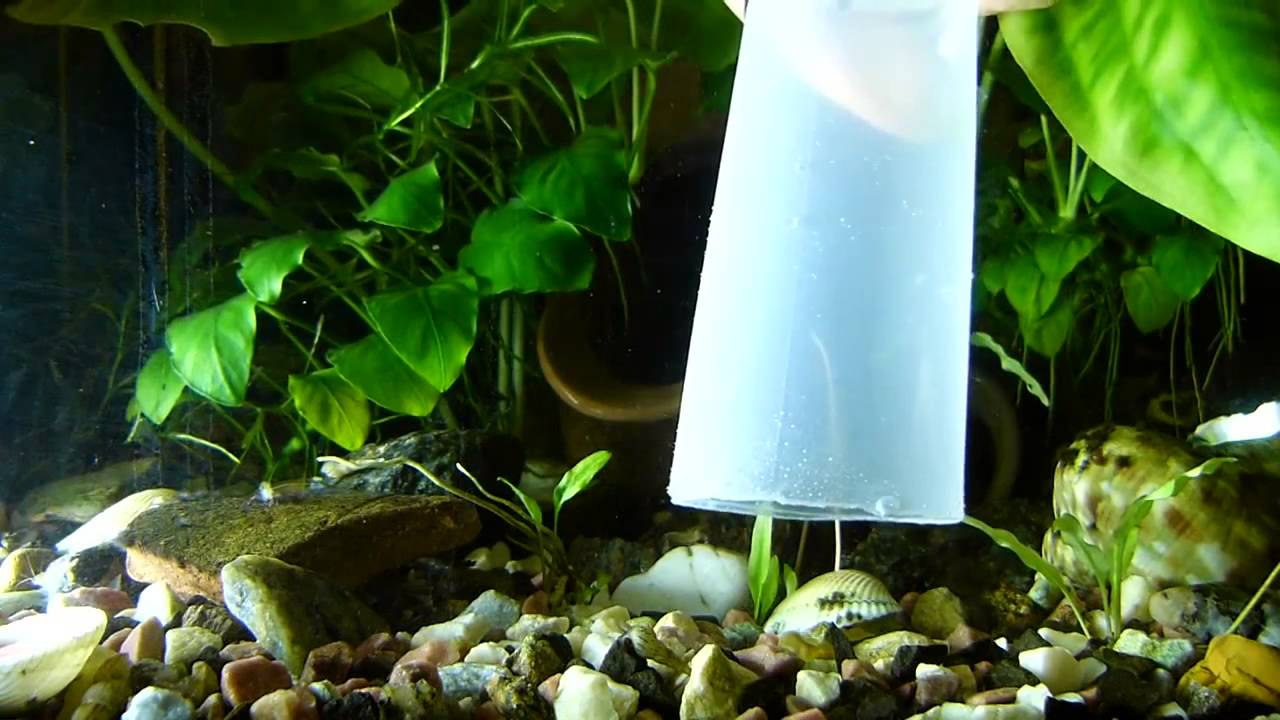
Sand and gravel are the most common substrate options for aquariums. These two elements can perform their biological role and have a sufficient number of useful properties to ensure the normal life of fish and plants.
If you settled on such a substrate, it is worth paying attention to the size of the particles (for sand will be optimal up to 2 millimeters, for gravel – about 3-5 millimeters). Pebbles gravel is better to choose more or less rounded, so as not to harm the inhabitants of the aquarium.
The disadvantages of such bedding only that it does not contain nutrients for plants and is not suitable for fish species that burrow into the ground. Overall, however, this is the best option for medium-sized aquariums. Gravel and sand do not change the chemical composition of the aquatic environment, and are very affordable, in addition, they are quite easy to clean.
- If you want to choose a substrate for an aquarium with abundant vegetation, special nutrient mixtures are an excellent solution. With their help, you can create a Dutch aquarium and create the most favourable environment for plant growth and development. They usually contain various mineral components, peat, trace elements and beneficial bacteria.
Thanks to such substrates, good water purification and circulation can be ensured. They can stimulate plant growth over a long period of time. In addition, nutrient mixtures are often used as food for shrimp, so it is advisable to buy them for the shrimp house.
- If you have a pseudo-marine aquarium or a cichlid tank, the best solution is to buy coral crumbs. It contains rounded particles, has a good porous structure and can make the water harder. Therefore, it is not suitable for all species of aquarium fish.
The disadvantage of coral crumb is its ability to darken rather quickly. Therefore, regular cleaning of the top layers of the substrate will be required.
Remember that the best substrate will be the one that is most suitable for the inhabitants of the aquarium. Therefore, the first thing to be sure to decide on the type of fish, and only then choose an aquarium substrate.
What is worth paying attention to?
Do not buy a grant of unknown origin with a specific chemical odour. When choosing a substrate, pay attention to:
- Size. Follow the basic rule: the smaller the parameters of the pond inhabitants, the smaller the ground should be. If the plant rhizomes are quite fragile, you should choose small particles.
- Fish behaviour. If your pets like to dig on the bottom, you should opt for options with coarse particles. The water mustn’t quickly become turbid. However, there are fish that burrow into the ground and live there. For them, the soil of a very coarse fraction may not be suitable.
- Parameters and shape of particles. Make sure that the particles are even, rounded, and have no chips and other defects. To ensure proper water permeability, it is necessary to ensure that all particles are approximately the same size.
- Soil composition. It is the composition that can affect various characteristics of the water (change its acidity, hardness, etc.). Be sure to study all the characteristics of the ground and how they can affect the water in the aquarium and the fish or plants themselves.
When buying a substrate, you can always use the help of a consultant. However, it is important to know the basic features of choosing a substrate for the aquarium, to understand how it affects the life of pets and plants. We hope that our article was useful to you, and now you can easily determine the type of substrate that is best suited for your aquarium.