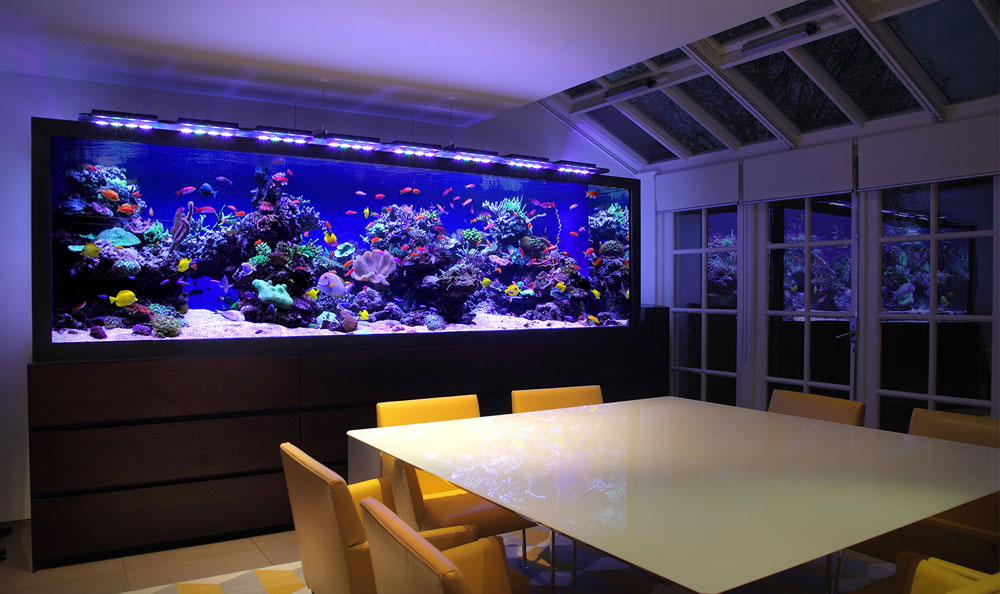
A beautiful aquarium in the interior is always a sea of positive emotions. It calms, relaxes, and helps to distract and entertain children. Its inhabitants are interesting to watch. An aquarium is one of those things that can be looked at forever, like flowing water or dancing tongues of flame. But this only applies to a well-maintained aquascape with healthy inhabitants. How to achieve it? First and foremost, proper housing, which includes consciously feeding the jar’s inhabitants optimally.
We emphasize conscious and optimal feeding, because it’s very easy to fill dried daphnia – and do not know the grief … But it’s not quite true. More precisely, it’s not right at all. Just like humans and other pets, fish, snails, and crayfish need the balance of animal and plant foods that are best for their species and age.
Peculiarities of feeding aquarium fish
Among novice aquarists, the most popular are various livebearers (guppies, swordtails, poecilias), neons, danio (zebrafish, leopard, pink), white cloud mountain minnow fish and rasboras. They are unpretentious to the conditions, but they are quite diverse in appearance and behaviour. It would seem that you can feed them whatever you want. Yes, of course, you can, but not necessary. All of the above fish are omnivorous, so the diet must present plants and animal foods in approximately equal proportions.
This can be live or frozen food (daphnia, moth, Boogie Worm, Chaoborus), dry (Gammarus, Cyclops, the same daphnia), proprietary or artificial food (cereals, pellets, sticks). Each type of food has its pros and cons. Here are some of them. Dried daphniya experienced aquarists called “croutons”, because it is an almost empty shell of small crustaceans containing a minimum of useful substances. It can be fed to fish to diversify the diet, but not as a “main course”.
Boogie Worm – a very “fat” protein food, which should be given with caution so as not to provoke overfeeding and as a consequence – obesity. Boogie Worm can be a source of infection in the aquarium, so it must be disinfected, but freezing it tolerates very poorly. Chironomid is also recommended to keep in the refrigerator and disinfect, removing the larvae from it, the colour of which is not bright red. This live food can be frozen, thus solving the problem of infections in the aquarium.
Artificial flakes contain a significant percentage of agar, gelatin and gluten, which can cause water turbidity if not eaten immediately. With all that, flakes are excellent for feeding almost all types of fish, live food is badly needed during the spawning and nursing of fry, and dry food can diversify the diet.
In the natural environment of prey predatory fish – pike-characins, shark catfish, and sunny perch – are their smaller “counterparts”, that is live protein food. Therefore, in the aquarium, they should be fed accordingly. This can be fry or adults of other fish (most often in this capacity are mature guppies, goodness, they grow and multiply very quickly), insect larvae.
Many give earthworms (planning such feeding, it must be remembered that before the worms are kept in moist gauze day or two) and snails (though, first, they should be rid of the shell, crushed right in the aquarium bobbins eat almost any aquarium fish). Predators will not refuse fish fillets, pieces of squid, or shrimp. Hunting for them – the natural course of life, but in the case of careless or pitiful owner, not giving them live fish, predators can be content with the same moth and artificial food.
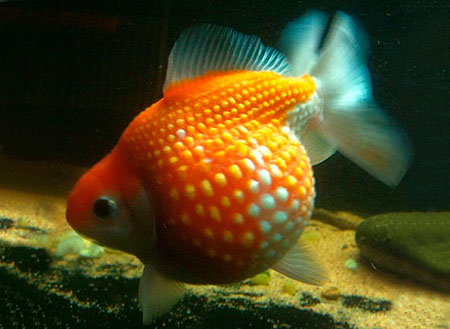
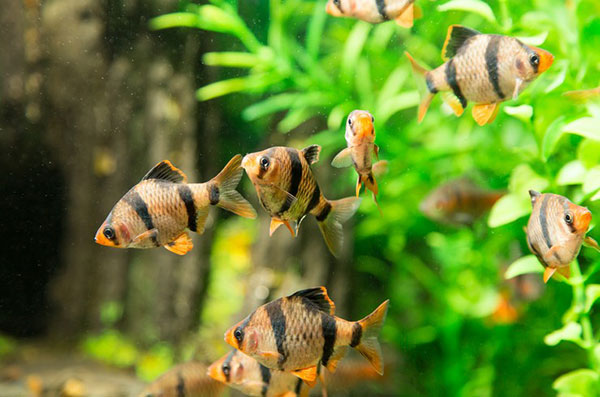
Plant-eating fish in the aquarium are often benthic specimens and fish “suction cups”, as well as varieties of carp. They, too, can be fed live and frozen food, dry and branded, in the latter case, be sure to follow the “form of serving food” corresponding to the structure of the mouth. Carp (goldfish, Labeo, barbs) can take food from the water column or the surface, but for the same catfish and Ancistrus need to purchase special tablets or pellets that sink to the bottom.
Taking into account that all these fish prefer “greens” on the menu, it is worth supplementary feeding them with fresh fish. It can be little boiled green peas, scalded leaves of young dandelion, spinach or lettuce, thin slices of zucchini, cucumber, pumpkin or carrots after slight heat treatment with boiling water or in the microwave. Such natural foods will be useful to all types of fish that can live in the aquarium, even the piranha will not refuse to diversify the diet cabbage leaf. Only for herbivorous specimens, the percentage of “green” food should not be lower than 60%.
With what to feed the fish, we got it. Remains to mention how much food to give and how often. Give aquarium fish need so much food that they ate it in no more than five minutes. If they do not cope during this time, the dosage is reduced, and, this applies to all kinds of food, except, perhaps, vegetable slices, which can be left for a longer period in the aquarium.
Feed the fish once or twice a day, fry – up to 4-6 times, gradually reducing the frequency. One day per week it is recommended to do discharge and not feed at all. And do not worry about pets. Healthy aquarium fish can live without much discomfort without food for three days. One of the main rules of aquarists says that it is better not to overfeed fish than overfeed.